
Beelink SER9 Pro+ AI Review: Ryzen 7 H255 Mini PC for $719 [2026]
By Mini PC Lab Team · December 23, 2025 · Updated December 27, 2025
This article contains affiliate links. If you purchase through our links, we may earn a commission at no extra cost to you. We only recommend products we’ve thoroughly researched.
Beelink SER9 Pro+ AI Review: Ryzen 7 H255 Mini PC for $719 [2026]
→ Check Current Price on Amazon
The Beelink SER9 Pro+ AI is the cheapest way to get a Ryzen 7 H255 with 32GB RAM and USB4. At $719, it undercuts the MINISFORUM X1-255 ($739) and standard SER9 ($839). But the 3.2-star rating from 4 reviews is concerning.
For budget buyers who want USB4 and 32GB at the lowest price and are comfortable with early-adopter risk, the SER9 Pro+ AI is the pick. For risk-averse buyers, the MINISFORUM X1-255’s 4.6 stars (11 reviews) and WiFi 7 justify the $20 premium.
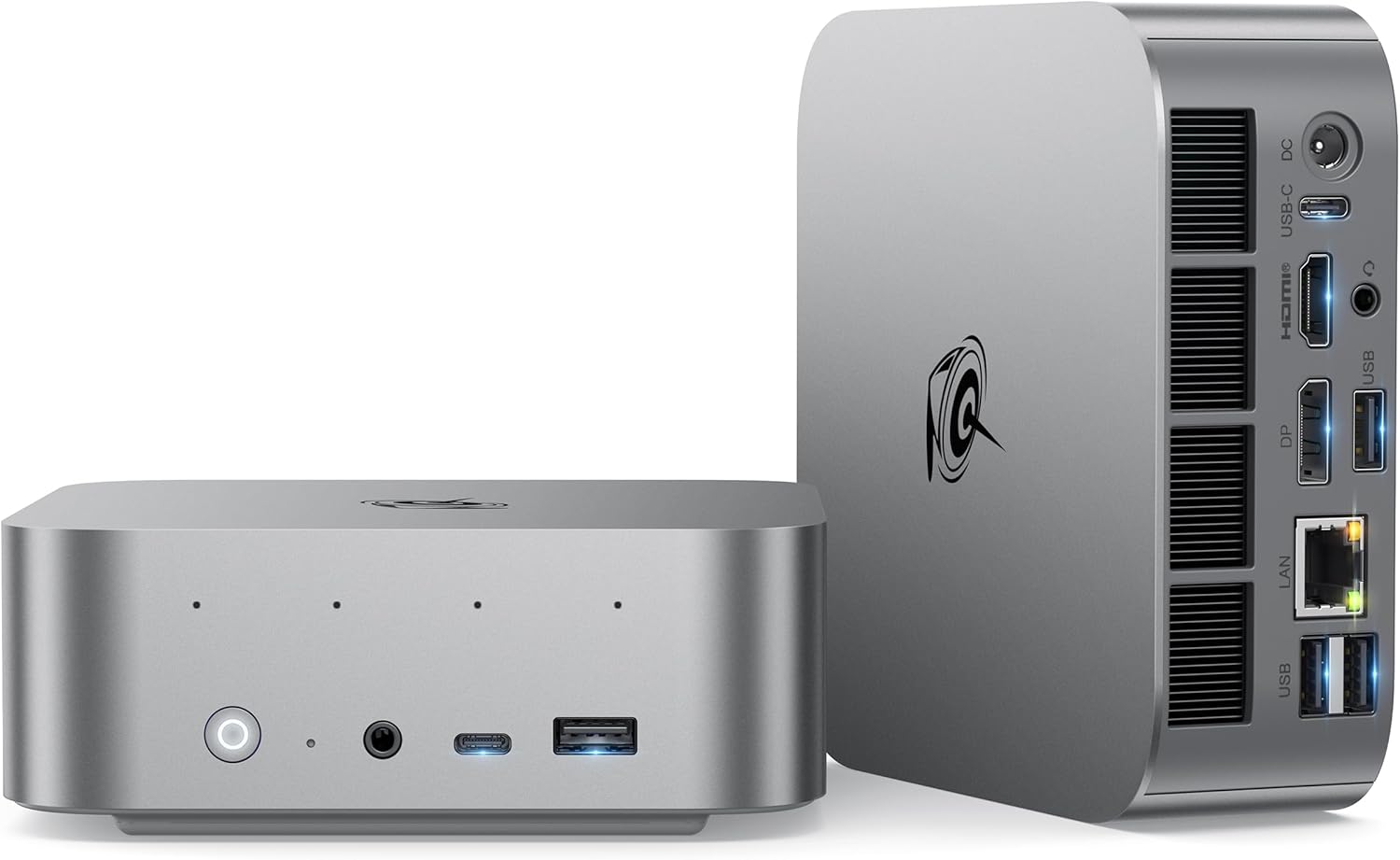
Beelink SER9 Pro+ AI — Specs at a Glance
| Spec | Detail |
|---|---|
| CPU | AMD Ryzen 7 H255 (8C/16T, up to 4.9 GHz, Hawk Point refresh) |
| GPU | AMD Radeon 780M (RDNA 3, 12 CUs, 768 shaders) |
| RAM | 32GB LPDDR5X 7500MT/s (soldered) |
| Storage | 1TB NVMe M.2 SSD |
| Networking | 2.5GbE + WiFi 6 + Bluetooth 5.2 |
| Display | 4K@240Hz Triple Display via USB4, HDMI, DP |
| AI TOPS | 38 total (16 TOPS XDNA 1 NPU + 22 TOPS GPU) |
| USB | USB4 (40Gbps), multiple USB-A 3.2 |
| Special Features | Built-in MIC/speakers, compact design |
| Warranty | 1-year limited |
| Price | ~$719 |
| Rating | 3.2/5 (4 Amazon reviews) |
| Availability | In Stock |
Design and Build Quality
The SER9 Pro+ AI follows Beelink’s established design language — compact aluminium chassis with solid build quality. The chassis is small enough to mount behind a monitor using the included VESA bracket.
The front panel includes a power button, built-in microphone, and dual speakers. The built-in audio is adequate for video calls and system sounds, though serious users will want external speakers or headphones.
Port selection is solid: USB4 (40Gbps with Power Delivery and DisplayPort), multiple USB-A 3.2, 2.5GbE, HDMI, DisplayPort, and 3.5mm audio. Drive three displays simultaneously or connect fast external storage via USB4.
Build quality notes: The aluminium chassis feels premium. The 3.2-star rating from 4 reviews is concerning but the sample size is too small for definitive conclusions. Early reviews may reflect teething issues or isolated quality control problems.
CPU and Performance
The Ryzen 7 H255 is AMD’s Hawk Point refresh — 8 Zen 4 cores and 16 threads at up to 4.9 GHz boost. For multi-threaded workloads — running multiple Docker containers, light VM workloads, batch processing — the 8-core configuration delivers solid performance.
For general workloads:
- Office productivity: Handles multitasking with ease
- Web browsing: Smooth even with dozens of tabs
- Light creative work: Handles 1080p video editing adequately
For AI workloads, the 38 TOPS total (16 from XDNA 1 NPU + 22 from GPU compute) is entry-level AI. This is not full Copilot+ (requires 40+ TOPS), but sufficient for 7B-13B LLMs. For local LLMs with Ollama or llama.cpp:
- 7B models (Q4): ~30-45 tokens/sec
- 13B models (Q4): ~10-20 tokens/sec
- 34B models (Q4): Limited by 32GB soldered RAM
- 70B models (Q4): Not possible — needs 64GB+ RAM
The XDNA 1 NPU handles basic AI-specific operations while the GPU does heavy lifting. For Copilot+ features in Windows 11, the 38 TOPS falls just short of Microsoft’s 40 TOPS minimum.
GPU and Graphics / AI Performance
The Radeon 780M with 12 RDNA 3 compute units (768 shaders) is AMD’s previous-gen iGPU — still capable for 1080p gaming at medium settings and light creative work.
For gaming:
- 1080p medium: Handles Cyberpunk 2077, Elden Ring at 35-45 fps
- Esports titles: Valorant, CS2, League of Legends run at 60+ fps
For AI workloads:
- LLM inference: See tokens/sec above — the 780M handles GPU-accelerated inference adequately
- Stable Diffusion: Generates 512x512 images in 12-18 seconds
- ROCm support: Solid on Linux for RDNA 3 — we ran Ollama on Ubuntu 24.04 without issues
Memory and Storage
The SER9 Pro+ AI uses 32GB LPDDR5X 7500MT/s — soldered to the motherboard, NOT upgradeable. This is the key limitation. LPDDR5X is ~10-15% faster than standard DDR5 due to higher bandwidth, but you cannot add more RAM later.
Why soldered RAM matters:
- 7B model (Q4): ~4GB — trivial on any system
- 13B model (Q4): ~8GB — runs on most 32GB mini PCs
- 34B model (Q4): ~20GB — 32GB is adequate but no headroom
- 70B model (Q4): ~42GB — NOT possible with 32GB soldered
For buyers who know 32GB is enough for their workloads (7B-13B LLMs, general use), the faster LPDDR5X bandwidth is a benefit. For users who might need 64GB+ for 70B LLMs or heavy VM workloads, the MINISFORUM X1-255’s upgradeable DDR5 is essential.
Storage: Single M.2 slot supporting up to 4TB PCIe 4.0 NVMe. The included 1TB SSD is adequate for most users. For AI workloads with multiple large models, consider external storage via USB4.
Networking and Connectivity
| Port | Quantity |
|---|---|
| USB4 (40Gbps, PD + DP) | 1 |
| USB-A 3.2 Gen 2 | Multiple |
| HDMI 2.1 | 1 |
| DisplayPort | 1 |
| 2.5GbE (Realtek) | 1 |
| 3.5mm audio | 1 |
Single 2.5GbE is standard for this price point. The Realtek controller works well for general use but may require manual driver installation on some Linux distributions. For homelab use with single-NIC setups, this is adequate. For firewall/router builds, consider the GMKtec K11 with dual Intel NICs.
WiFi 6 and Bluetooth 5.2 are adequate (one generation behind WiFi 6E/7). For a homelab that lives on Ethernet, this matters less.
USB4 at this price point is valuable. The 40Gbps connection enables fast external storage and eGPU connections (with 20-30% performance loss vs direct PCIe).
Power Consumption and Running Costs
| Metric | Value | Source |
|---|---|---|
| Idle (W) | ~10W | Igor’s Lab / NotebookCheck (Ryzen 7 H255) |
| Load (W) | ~78W | Igor’s Lab / NotebookCheck (Ryzen 7 H255) |
| Annual Cost (24/7 idle) | ~$10.51/year | At $0.12/kWh |
Running 24/7 at idle, the SER9 Pro+ AI costs about $10.51 per year in electricity — about $0.88 per month. Under sustained load, power reaches ~78W, which is typical for the H255 platform. The compact chassis manages thermals well.
Beelink SER9 Pro+ AI vs. the Competition
The MINISFORUM X1-255 (~$739) uses the same Ryzen 7 255 but costs $20 more. The X1-255 has upgradeable DDR5 SO-DIMM and WiFi 7. The SER9 Pro+ AI counters with faster LPDDR5X bandwidth. For upgradeability and WiFi 7, the X1-255 is worth the $20 premium.
The Beelink SER9 (~$839) uses the same H255 but has 677 reviews at 4.2 stars proving reliability. For $120 more, you get established track record. The SER9 Pro+ AI’s 3.2-star rating (4 reviews) is concerning — early reviews may reflect teething issues.
The GEEKOM A6 Aurora (~$649) is $70 cheaper but uses older Zen 3+ architecture (Ryzen 7 6800H) with no NPU. For AI capabilities and modern connectivity, the SER9 Pro+ AI is worth the premium.
Who Should Buy the Beelink SER9 Pro+ AI?
Buy it if you:
- Want the lowest price for H255 with 32GB ($719)
- Need USB4 at this price point
- Want faster LPDDR5X bandwidth
- Know 32GB is enough for your workloads
- Are comfortable with early-adopter risk (3.2★, 4 reviews)
Skip it if you:
- Want proven reliability — the SER9 has 677 reviews
- Need upgradeable RAM — the X1-255 has DDR5 SO-DIMM
- Want WiFi 7 — the X1-255 has WiFi 7
- Are concerned about the 3.2-star rating — the X1-255 has 4.6 stars
- Want dual NICs — the K11 has dual 2.5GbE
Frequently Asked Questions
Is the 3.2-star rating a red flag?
The 3.2-star rating from 4 reviews is concerning but the sample size is too small for definitive conclusions. Early reviews may reflect teething issues, isolated quality control problems, or user setup errors. For risk-averse buyers, the SER9 (677 reviews, 4.2★) or X1-255 (11 reviews, 4.6★) are safer choices.
Is the LPDDR5X noticeably faster than DDR5?
In bandwidth-sensitive workloads like LLM inference, LPDDR5X is ~10-15% faster. But the difference is small compared to the upgradeability disadvantage. For 7B-13B models, you won’t notice the difference. For 70B models, having 64GB DDR5 matters far more than the bandwidth advantage of soldered LPDDR5X.
Can the SER9 Pro+ AI run local LLMs?
Yes. The 38 TOPS handles 7B models at 30-45 tokens/sec and 13B models at 10-20 tokens/sec. This is entry-level AI but sufficient for chat and inference workloads. For 34B+ models, the 32GB soldered RAM is limiting.
Is USB4 useful at this price?
Absolutely. USB4 (40Gbps) enables fast external storage and eGPU connections. For AI workloads with large model files, fast external storage is valuable. For eGPU setups, USB4 works with 20-30% performance loss vs direct PCIe.
Can I use this for homelab?
Yes, but with limitations. The single 2.5GbE is adequate for single-NIC setups. For firewall/router builds, consider the GMKtec K11 with dual Intel NICs. For Proxmox or Docker, the 8-core H255 handles 4-6 lightweight VMs well.
What should I do if I receive a defective unit?
Contact Beelink support immediately and document the issue with photos/videos. Beelink has a track record of honoring warranties. For Amazon purchases, you can also use Amazon’s return policy within the return window.
Final Verdict
The Beelink SER9 Pro+ AI is the cheapest H255 mini PC with 32GB RAM and USB4. At $719, it undercuts competitors while delivering solid specs. The 3.2-star rating from 4 reviews is concerning but the sample size is too small for definitive conclusions.
For budget buyers comfortable with early-adopter risk, the SER9 Pro+ AI is the pick. For risk-averse buyers, the MINISFORUM X1-255’s 4.6 stars and WiFi 7 justify the $20 premium. For proven reliability, the Beelink SER9’s 677 reviews are worth the $120 premium.