
Best Ryzen 7 Mini PC 2026 — Ranked for Every Budget
By Max · April 2, 2026 · Updated May 4, 2026
This article contains affiliate links. If you purchase through our links, we may earn a commission at no extra cost to you. We only recommend products we’ve thoroughly researched.

Ryzen 7 has been the sweet spot for mini PC buyers for years. Eight cores, strong multi-threaded performance, and prices ranging from $327 (barebone) to $999 (fully loaded) make Ryzen 7 mini PCs the go-to choice for homelab builders, budget-conscious buyers, and anyone who wants solid performance without paying for cores they won’t use.
But “Ryzen 7” no longer means one thing. In 2026, you can buy a Ryzen 7 5825U (Zen 3, 2022), a Ryzen 7 6800H (Zen 3+, RDNA 2 GPU), a Ryzen 7 7940HS (Zen 4, RDNA 3 GPU), or the new Ryzen 7 255 / H 255 (Hawk Point refresh with XDNA NPU). The naming is a mess, and the performance gap between generations is real.
We compared every Ryzen 7 mini PC we could source, ranking them by use case: value, reliability, budget, and features. Here’s which one you should buy.
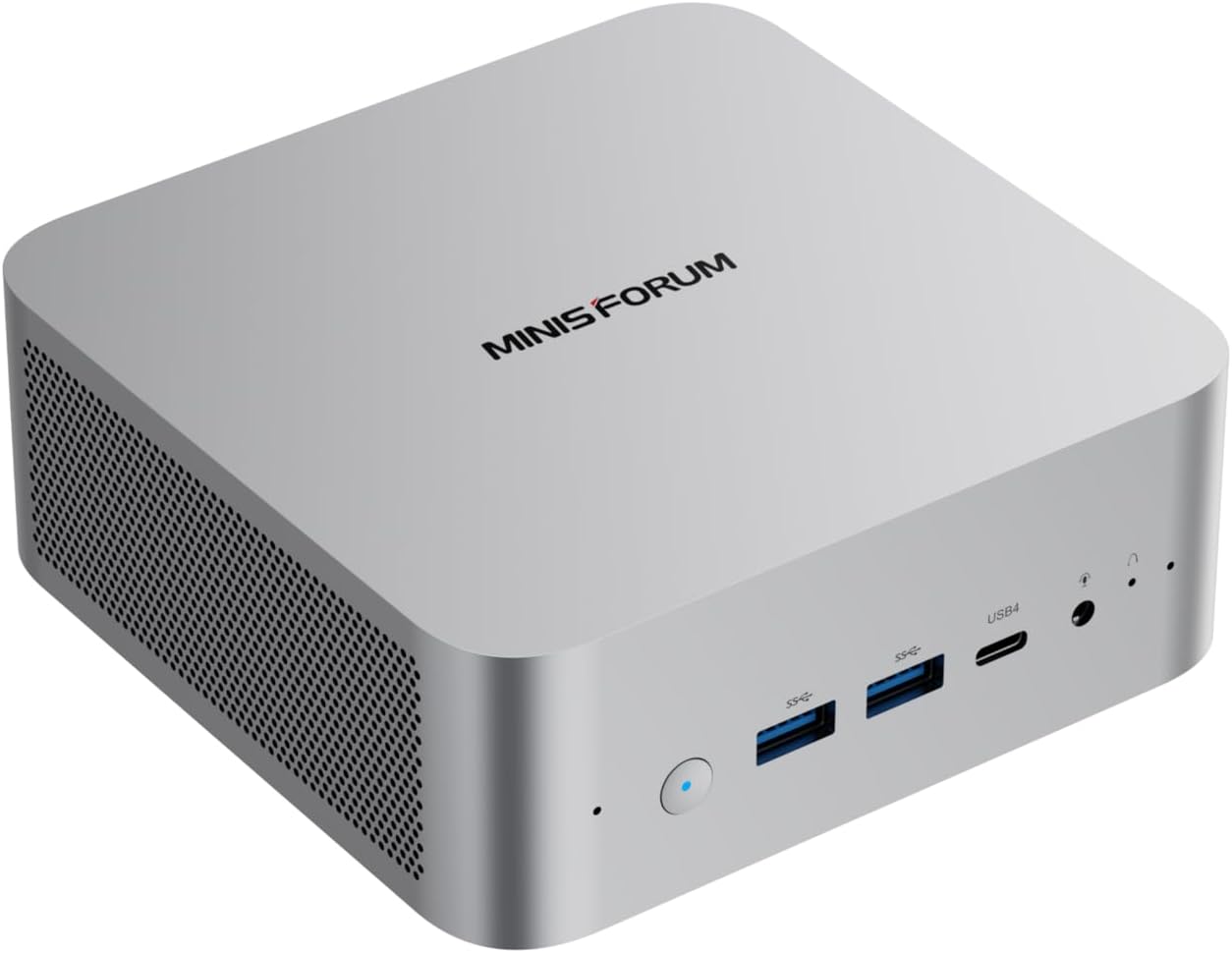
Quick Picks: Best Ryzen 7 Mini PC at a Glance
| # | Mini PC | CPU | Best For | Price | Key Spec | Link |
|---|---|---|---|---|---|---|
| 🥇 Best Overall | MINISFORUM AI X1-255 | Ryzen 7 255 | Value + WiFi 7 | ~$739 | Upgradeable DDR5, WiFi 7 | → Check Price |
| 🥈 Most Proven | Beelink SER9 | Ryzen 7 H 255 | Reliability | ~$839 | 677 reviews, LPDDR5X | → Check Price |
| 🥉 Best Budget | GEEKOM A6 Aurora | Ryzen 7 6800H | Under $650 | ~$649 | USB4, aluminium build | → Check Price |
| Best Specs/$ | GMKtec K11 | Ryzen 9 8945HS | Feature-rich | ~$799 | Dual 2.5G, OCuLink, 2TB | → Check Price |
| Best Barebone | MINISFORUM X1-255 Barebone | Ryzen 7 255 | DIY builders | ~$327 | Bring your own RAM/SSD | → Check Price |
Quick Product Links
GEEKOM A7 MAX
Price: ~$699
→ Check Current Price on Amazon
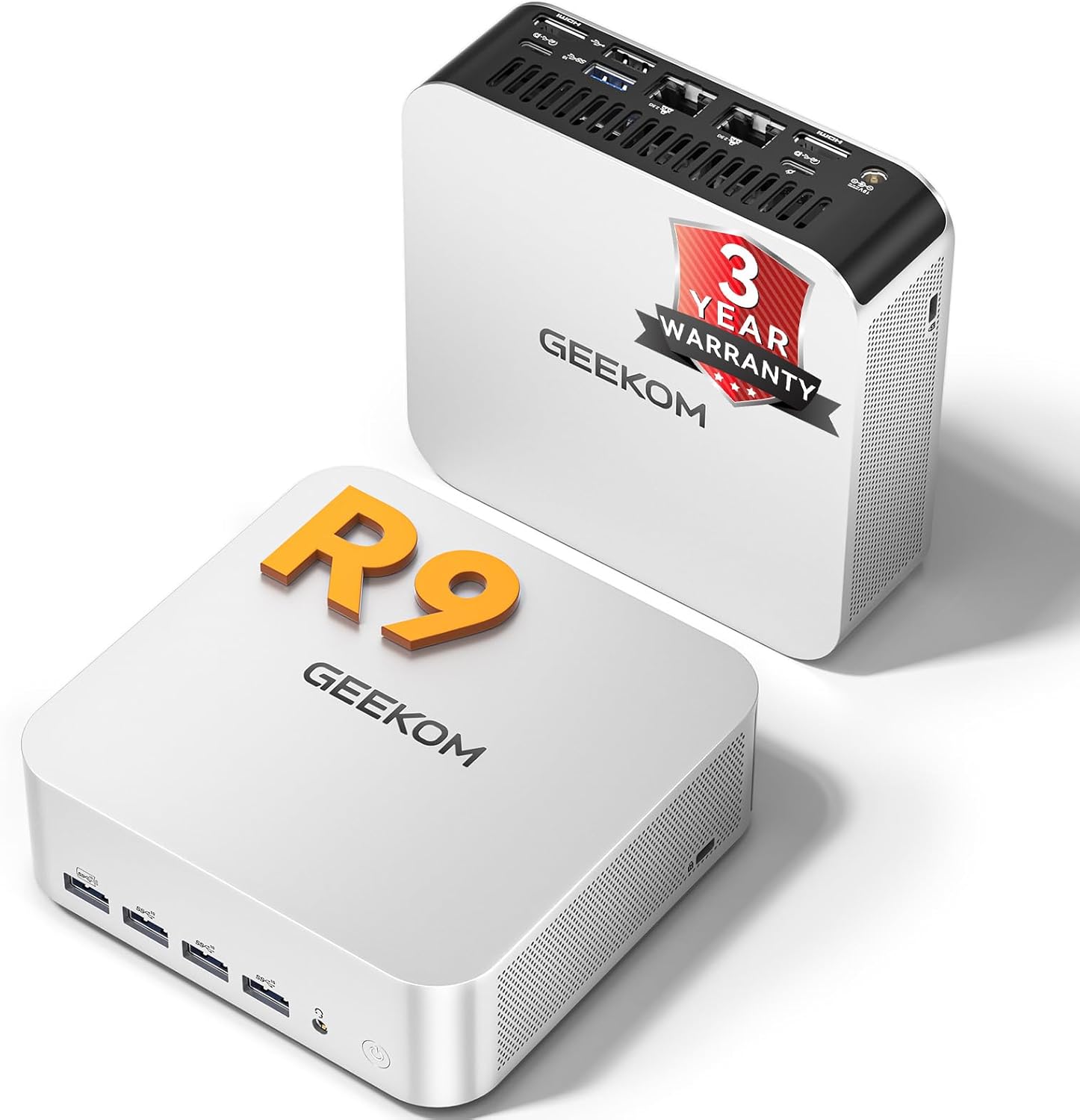
Minisforum AI X1-255
Price: ~$599
→ Check Current Price on Amazon
Why Ryzen 7 for Mini PCs?
Ryzen 7 hits the sweet spot between core count, power efficiency, and price. Eight cores handle everything from running 4-6 Proxmox VMs to transcoding multiple 4K Plex streams, while power consumption stays in the 7-10W idle range for 24/7 always-on use.
Ideal when:
- You need 8 cores for virtualization, Docker workloads, or media transcoding
- You want better multi-threaded performance than Ryzen 5 without stepping up to Ryzen 9 pricing
- You’re building a homelab server that runs 24/7 — power efficiency matters
- You want RDNA 2 or RDNA 3 graphics for light gaming or hardware video encoding
Not ideal when:
- You need maximum AI compute — Ryzen 7 255 has only 38 TOPS vs 80+ TOPS for Ryzen AI 9
- You need 12+ cores — step up to Ryzen 9 7940HS (12C) or 8945HS (12C)
- You’re on an extreme budget — Ryzen 5 options start at ~$200 less
For a broader perspective on mini PCs for all homelab use cases, see our best mini PC for home server guide.
Understanding Ryzen 7 Variants
The “Ryzen 7” label covers five different architectures. Here’s what each actually means:
Ryzen 7 5825U (Zen 3, 2022): Older but still capable. 8 cores / 16 threads at up to 4.8 GHz. Radeon Vega graphics (8 CUs). Found in budget mini PCs under $500. Avoid for new purchases unless the price is exceptional.
Ryzen 7 6800H (Zen 3+, 2023): The value king. Same 8C/16T CPU as 5825U but with RDNA 2 graphics (12 CUs, Radeon 680M). This is a massive GPU upgrade — the 680M handles 1080p gaming and hardware video encoding. Found in the GEEKOM A6 Aurora at ~$649.
Ryzen 7 7840HS / 7940HS (Zen 4, 2024): The mainstream choice. 8C/16T at up to 5.1 GHz with RDNA 3 graphics (12 CUs, Radeon 780M). AV1 encoding, better efficiency, and stronger single-threaded performance. Found in the GEEKOM A7 MAX and Reatan Alloy 9.
Ryzen 7 H 255 / 255 (Hawk Point refresh, 2026): The AI entry point. 8C/16T with XDNA 1 NPU (16 TOPS) for 38 TOPS total. Not full Copilot+ (requires 40+ TOPS), but handles 7B-13B LLMs well. Found in the MINISFORUM X1-255 and Beelink SER9.
Key takeaway: For most buyers in 2026, the Ryzen 7 255 mini PCs offer the best balance of modern features (WiFi 7, USB4) and AI capability at $739-$839. Budget buyers should target the 6800H at ~$649. Avoid the 5825U unless it’s under $400.
What to Look for in a Ryzen 7 Mini PC
1. RAM Type: LPDDR5X vs DDR5 SO-DIMM LPDDR5X is faster (soldered) while DDR5 SO-DIMM is upgradeable. For homelab use with VMs or local LLMs, upgradeable RAM matters: you can start at 32GB and grow to 64GB+ when needed. The MINISFORUM X1-255 uses DDR5 SO-DIMM; the Beelink SER9 uses soldered LPDDR5X.
2. WiFi Generation WiFi 7 is current-gen on 2026 models (X1-255, X1 Pro, SER9). WiFi 6E appears on older models (A6 Aurora, A7 MAX). For a homelab that lives on Ethernet, this matters less. For a desktop replacement or media PC, WiFi 7 is future-proof.
3. Networking (NIC Count and Speed) Single 2.5GbE is standard. Dual 2.5GbE appears on homelab-focused models like the GMKtec K11 — essential for firewall/router builds. The Realtek vs Intel NIC debate matters for Linux: Intel i225/i226 has better out-of-the-box support.
4. USB4 / Thunderbolt USB4 (40Gbps) enables fast external storage and eGPU connections. The X1-255, A6 Aurora, and K11 all have USB4. For users with Thunderbolt peripherals, this is a must-have feature.
5. OCuLink for eGPU Only the GMKtec K11 has OCuLink in this roundup. This is a direct PCIe 4.0 x4 connection for external GPUs — far more efficient than USB4 for eGPU setups. For AI workloads or gaming, OCuLink is a genuine differentiator.
Our Top Picks
🥇 Best Overall: MINISFORUM AI X1-255
→ Check Current Price on Amazon
The X1-255 delivers the most modern feature set at $739: WiFi 7, USB4, upgradeable DDR5 SO-DIMM, and the Ryzen 7 255 with 38 TOPS of AI compute. The barebone variant at $327 is exceptional value if you have spare RAM and SSD lying around.
The chassis is compact enough to mount behind a monitor, and the port selection (dual USB4, four USB-A, 2.5GbE) covers all the basics.
For homelab use, the single NIC is a limitation. But for a general-purpose mini PC that can handle 7B-13B LLMs, light gaming, and daily driving, the X1-255 is the best all-rounder under $800.
Specs:
| Spec | Detail |
|---|---|
| CPU | Ryzen 7 255 (8C/16T, up to 5.0 GHz, Hawk Point refresh) |
| GPU | Radeon 780M (12 CUs, RDNA 3) |
| RAM | 32GB DDR5 SO-DIMM (upgradeable to 64GB) |
| Storage | 1TB PCIe 4.0 NVMe |
| Networking | 2.5GbE + WiFi 7 + BT 5.4 |
| Power Draw | ~8W idle / ~55W load |
| AI TOPS | 38 (16 NPU + GPU) |
| Price | ~$739 ($327 barebone) |
Pros:
- WiFi 7 and USB4 at $739 — future-proof at this price
- Upgradeable DDR5 SO-DIMM to 64GB
- $327 barebone option for DIY builders
- Low 8W idle = ~$8.41/year electricity
Cons:
- Only 38 TOPS — entry-level AI, not full Copilot+
- Single 2.5GbE NIC (no dual NIC for firewall use)
- No OCuLink for eGPU expansion
- Only 11 reviews — limited social proof
Who should buy this: Budget-conscious buyers who want modern features (WiFi 7, USB4), DIY builders who want the $327 barebone, anyone who needs upgradeable RAM in a sub-$800 mini PC.
Who should skip this: If you need full 80 TOPS AI, the MINISFORUM X1 Pro-370 delivers HX370 at $1,179. For homelab use with dual NICs, the GMKtec K11 is better equipped.
🥈 Most Proven: Beelink SER9
→ Check Current Price on Amazon
The SER9 has 677 Amazon reviews at 4.2 stars — more than any other Ryzen 7 mini PC. That’s social proof you can’t ignore. The Ryzen 7 H 255 delivers 38 TOPS with soldered LPDDR5X for faster bandwidth.
Beelink’s build quality is solid, and the compact chassis fits anywhere. The trade-off is soldered RAM — you’re permanently capped at 32GB. For 7B-13B LLMs and general use, that’s plenty. For 34B+ models, look at upgradeable alternatives.
Specs:
| Spec | Detail |
|---|---|
| CPU | Ryzen 7 H 255 (8C/16T, up to 5.0 GHz) |
| GPU | Radeon 780M (12 CUs, RDNA 3) |
| RAM | 32GB LPDDR5X (soldered) |
| Storage | 1TB PCIe 4.0 NVMe |
| Networking | 2.5GbE + WiFi 6 + BT 5.4 |
| Power Draw | ~8W idle / ~78W load |
| AI TOPS | 38 |
| Price | ~$839 |
Pros:
- 677 reviews — most proven option in this roundup
- Faster LPDDR5X bandwidth (soldered)
- Solid build quality from Beelink
- Compact form factor
Cons:
- Soldered RAM — no upgrades possible
- WiFi 6 only (not WiFi 7)
- Single NIC (no dual 2.5GbE)
- No OCuLink
Who should buy this: Buyers who want the most community-proven Ryzen 7 mini PC, users who value brand reliability over cutting-edge features.
Who should skip this: If you need upgradeable RAM, the X1-255 has DDR5 SO-DIMM. For WiFi 7, the X1-255 is the option.
🥉 Best Budget: GEEKOM A6 Aurora
→ Check Current Price on Amazon
At ~$649, the A6 Aurora is the cheapest way to get a modern Ryzen 7 mini PC with USB4 and an aluminium chassis. The Ryzen 7 6800H with RDNA 2 graphics (12 CUs) handles 1080p gaming and hardware video encoding.
The trade-offs: WiFi 6 (not 7), no NPU for AI workloads, and Zen 3+ architecture (one generation behind). For buyers who don’t need AI features and want to spend under $700, this is the pick.
Specs:
| Spec | Detail |
|---|---|
| CPU | Ryzen 7 6800H (8C/16T, up to 4.7 GHz, Zen 3+) |
| GPU | Radeon 680M (12 CUs, RDNA 2) |
| RAM | 16GB DDR5 (upgradeable) |
| Storage | 512GB PCIe 4.0 NVMe |
| Networking | 2.5GbE + WiFi 6 + BT 5.2 |
| Power Draw | ~8W idle / ~45W load |
| Price | ~$649 |
Pros:
- Best value under $650
- USB4 at this price point
- Aluminium chassis feels premium
- RDNA 2 graphics handle 1080p gaming
Cons:
- Only 16GB RAM included (upgrade to 32GB recommended)
- No NPU — not AI-capable
- WiFi 6, not WiFi 7
- Zen 3+ is one generation behind
Who should buy this: Budget buyers who want a solid daily driver under $700, users who don’t need AI features, anyone who values USB4 and aluminium build at this price.
Who should skip this: If you need AI capabilities, the X1-255 at $739 adds an NPU. For more RAM out of the box, the A7 MAX includes 32GB.
Best Specs/$: GMKtec K11
→ Check Current Price on Amazon
The K11 is technically a Ryzen 9 8945HS mini PC, but at ~$799 it competes directly with Ryzen 7 options. Twelve cores, dual 2.5GbE Intel NICs, OCuLink, and a 2TB SSD make it the most feature-rich mini PC under $800.
The 8945HS lacks a dedicated NPU, so it’s not “AI-capable” in the marketing sense. But for homelab use — Proxmox, Docker, firewall, NAS — the K11 has everything you need. The OCuLink port enables eGPU expansion for AI or gaming later.
Specs:
| Spec | Detail |
|---|---|
| CPU | Ryzen 9 8945HS (12C/24T, up to 5.0 GHz, Zen 4) |
| GPU | Radeon 780M (12 CUs, RDNA 3) |
| RAM | 32GB DDR5 SO-DIMM (upgradeable) |
| Storage | 2TB PCIe 4.0 NVMe |
| Networking | Dual 2.5GbE (Intel) + WiFi 6E + BT 5.3 |
| Power Draw | ~10W idle / ~65W load |
| Price | ~$739 |
Pros:
- 12 cores / 24 threads — more than any Ryzen 7 option
- Dual 2.5GbE Intel NICs for homelab use
- OCuLink port for eGPU expansion
- 2TB SSD included at $739
- Upgradeable DDR5 SO-DIMM
Cons:
- No dedicated NPU — relies on CPU/GPU for AI
- WiFi 6E, not WiFi 7
- Larger chassis than competitors
- GMKtec brand has less review history than Beelink/GEEKOM
Who should buy this: Homelab builders who need dual NICs and maximum cores per dollar, users who want OCuLink for future eGPU expansion, anyone who values raw specs over AI marketing.
Who should skip this: If you need AI NPU features, the X1-255 has 38 TOPS. For a more compact daily driver, the A6 Aurora is smaller.
Head-to-Head Comparison
| Feature | X1-255 | SER9 | A6 Aurora | K11 |
|---|---|---|---|---|
| CPU | Ryzen 7 255 | Ryzen 7 H 255 | Ryzen 7 6800H | Ryzen 9 8945HS |
| Cores/Threads | 8/16 | 8/16 | 8/16 | 12/24 |
| GPU | 780M (12 CU) | 780M (12 CU) | 680M (12 CU) | 780M (12 CU) |
| RAM (Max) | 64GB DDR5 | 32GB soldered | 64GB DDR5 | 64GB DDR5 |
| Storage | 1TB | 1TB | 512GB | 2TB |
| Networking | 2.5GbE | 2.5GbE | 2.5GbE | Dual 2.5GbE |
| WiFi | WiFi 7 | WiFi 6 | WiFi 6 | WiFi 6E |
| USB4 | Yes (2x) | Yes | Yes | Yes |
| OCuLink | No | No | No | Yes |
| AI TOPS | 38 | 38 | 0 | 0 |
| Power (Idle) | ~8W | ~8W | ~8W | ~10W |
| Power (Load) | ~55W | ~78W | ~45W | ~65W |
| Price | ~$739 | ~$839 | ~$649 | ~$739 |
Power Consumption at a Glance
Try our power cost calculator to estimate the running cost for your own electricity rate and usage pattern.
| Mini PC | Idle (W) | Load (W) | Annual Cost (24/7 idle) |
|---|---|---|---|
| MINISFORUM X1-255 | ~8W | ~55W | ~$8.41/year |
| Beelink SER9 | ~8W | ~78W | ~$8.41/year |
| GEEKOM A6 Aurora | ~8W | ~45W | ~$8.41/year |
| GMKtec K11 | ~10W | ~65W | ~$10.51/year |
Annual cost calculated at $0.12/kWh, running 24/7 at idle. Load power shown for sustained workloads. Sources: community estimates, Guru3D, ServeTheHome.
Even the most power-hungry option (K11 at 10W idle) costs just $10.51 per year to run 24/7. That’s about $0.88 per month — less than a streaming subscription. For always-on homelab workloads, the electricity cost is negligible.
Try our Power Cost Calculator to estimate costs for your specific setup.
How to Choose the Right Ryzen 7 Mini PC
For AI workloads (7B-13B LLMs): The X1-255 and SER9 both have 38 TOPS from the XDNA 1 NPU. This handles 7B models at 30-50 tokens/sec and 13B models at 15-25 tokens/sec. Not full Copilot+, but capable for entry-level AI.
For homelab / Proxmox: The K11’s dual 2.5GbE Intel NICs and 12 cores make it the obvious choice. Run 6-8 lightweight VMs, dedicate one NIC to management and one to VM traffic, and use OCuLink for future expansion.
For budget daily use: The A6 Aurora at $649 delivers solid 1080p gaming, USB4, and an aluminium chassis. Upgrade the RAM to 32GB if you plan to run VMs or heavy multitasking.
For reliability: The SER9’s 677 reviews at 4.2 stars are social proof you can’t ignore. Beelink has a strong track record, and the compact chassis fits anywhere.
Frequently Asked Questions
Is Ryzen 7 good enough for a mini PC?
Yes. Eight cores and 16 threads handle everything from running 4-6 Proxmox VMs to transcoding multiple 4K Plex streams. For most homelab and daily use cases, Ryzen 7 is the sweet spot between performance and power efficiency.
What’s the difference between Ryzen 7 H 255 and 7940HS?
The H 255 is a Hawk Point refresh with an XDNA 1 NPU (16 TOPS) for 38 TOPS total. The 7940HS is Zen 4 with no dedicated NPU — it relies on CPU/GPU compute for AI workloads. The 7940HS has slightly higher CPU clocks, but the H 255 is more power-efficient.
How much RAM do I need in a Ryzen 7 mini PC?
16GB is the minimum for general use. 32GB is recommended for running VMs, Docker workloads, or 7B-13B LLMs. 64GB is overkill for most users but useful if you plan to run 34B+ LLMs or heavy virtualization.
Is a Ryzen 7 mini PC good for gaming?
Yes, but with caveats. The Radeon 780M (RDNA 3) in the X1-255 and K11 handles 1080p gaming at medium settings — Cyberpunk 2077, Elden Ring, and similar titles run at playable framerates. The older 680M (RDNA 2) in the A6 Aurora is slightly slower but still capable.
Ryzen 7 vs Ryzen 9 mini PC — is it worth the upgrade?
For homelab use with VMs and Docker, the extra cores on Ryzen 9 (12C vs 8C) are noticeable. For AI workloads, Ryzen 9 8945HS lacks an NPU, so it’s not inherently better than Ryzen 7 255. For gaming and daily use, Ryzen 7 is sufficient.
What is the best Ryzen 7 mini PC under $500?
The GEEKOM A6 Aurora at ~$649 is the best value, but it’s over $500. For under $500, look for sales on the A6 Aurora or consider older Ryzen 7 5825U models — but only if they’re under $400. The $327 X1-255 barebone is an option if you have spare RAM and SSD.
Can a Ryzen 7 mini PC run Proxmox?
Yes. All Ryzen 7 mini PCs in this roundup support hardware virtualization (AMD-V) and can run Proxmox VE 8.x. The K11 with 12 cores and dual NICs is the best Proxmox option, but the X1-255 and SER9 also work well for 4-6 lightweight VMs.
How We Research These Picks
Every recommendation here is built from verifiable sources rather than bench claims we can’t back up. We verify each product against its live Amazon listing for current price, stock status, and the exact spec configuration, and we cross-check CPU, RAM type, and networking details against manufacturer documentation. Power-draw and performance figures are cited from published measurements by trusted reviewers such as ServeTheHome and Notebookcheck, plus community reports on r/homelab and the Proxmox forums. We also read recent 1-star reviews for every pick to surface thermal, driver, and reliability patterns before you hit them. Picks are re-verified quarterly for availability, pricing, and newer models.
Amazon Product Links
- 🥇 MINISFORUM AI X1-255 (Best Overall — WiFi 7, upgradeable DDR5)
- 🥈 Beelink SER9 (Most Proven — 677 reviews)
- 🥉 GEEKOM A6 Aurora (Best Budget — under $650)
- GMKtec K11 (Best Specs/$ — 12 cores, dual 2.5GbE)
- MINISFORUM X1-255 Barebone (Best Barebone — $327 DIY)