
GEEKOM IT12 vs A6 Aurora: Budget Intel vs AMD Under $650 [2026]
By Max · April 3, 2026 · Updated May 4, 2026
This article contains affiliate links. If you purchase through our links, we may earn a commission at no extra cost to you. We only recommend products we’ve thoroughly researched.
![GEEKOM IT12 vs A6 Aurora: Budget Intel vs AMD Under $650 [2026]](/images/heroes/variants/geekom-it12-vs-geekom-a6-aurora/1920.webp)
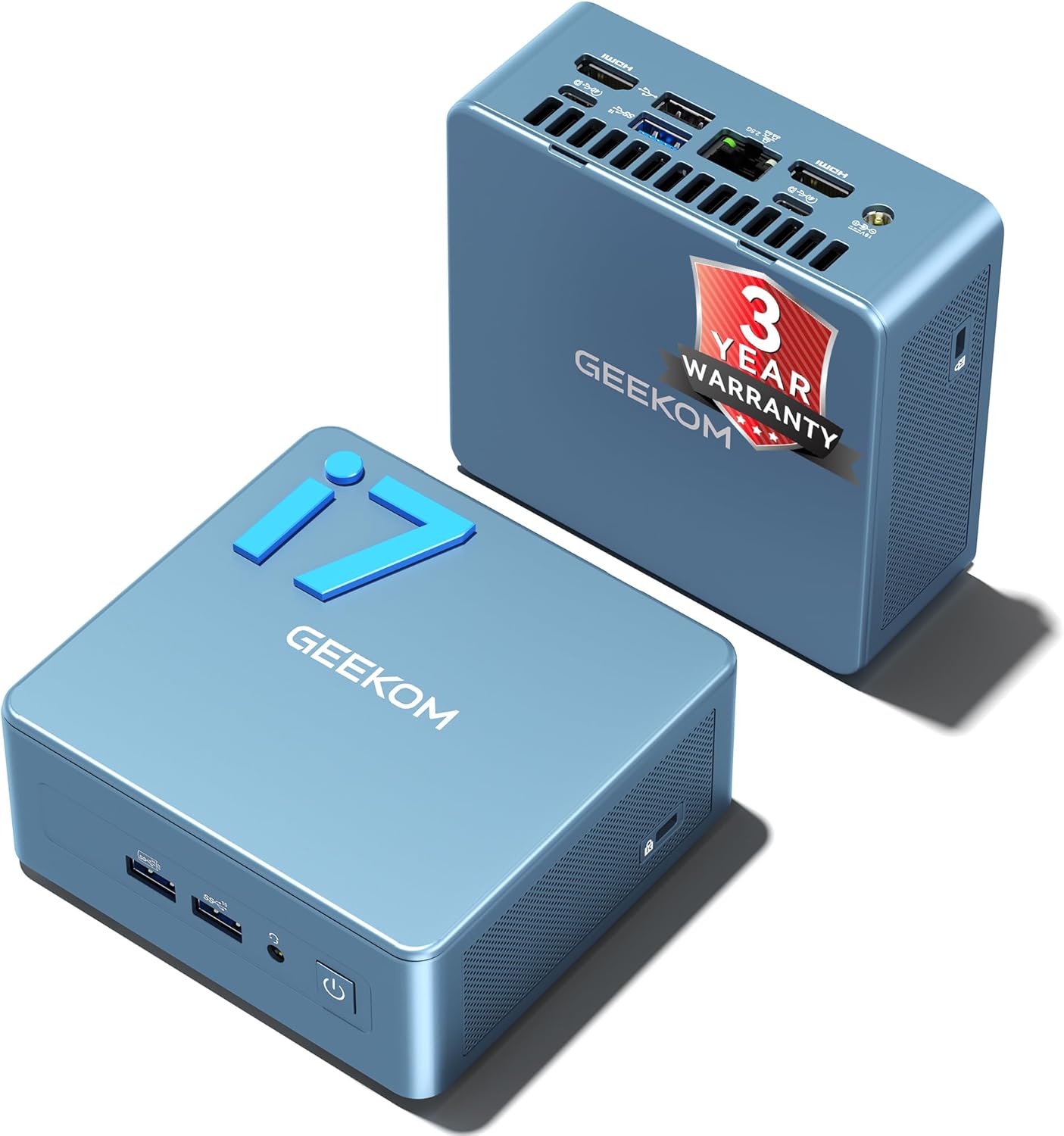
The Short Answer
Same price, same brand, different platforms. The GEEKOM A6 Aurora with Ryzen 7 6800H is the better pick for most users — its Radeon 680M iGPU is significantly faster than the IT12’s Intel Iris Xe for gaming, video editing, and creative work. The IT12 with i7-1280P only makes sense if you need Intel-specific software compatibility or prefer the 14-core multi-threaded performance.
Both are 2022-era silicon at 2026 prices — neither is current-gen. But at $649, both represent solid value for budget-conscious buyers who want a complete mini PC without cutting corners on build quality or connectivity.
Side-by-Side Specs
| Spec | GEEKOM IT12 | GEEKOM A6 Aurora | Winner |
|---|---|---|---|
| CPU | Intel i7-1280P (14C/20T, Alder Lake) | AMD Ryzen 7 6800H (8C/16T, Zen 3+) | 🏆 IT12 (more cores) |
| GPU | Intel Iris Xe (96 EU) | AMD Radeon 680M (12 CUs, RDNA 2) | 🏆 A6 Aurora (much faster) |
| RAM | 16GB DDR5 (expandable to 64GB) | 16GB DDR5 (expandable) | Tie |
| Storage | 1TB PCIe NVMe SSD | 1TB PCIe NVMe SSD | Tie |
| Networking | 2.5GbE (Realtek) | 2.5GbE (Realtek) | Tie |
| WiFi | WiFi 6E | WiFi 6E | Tie |
| USB | 2x USB4, 4x USB-A 3.2 | 2x USB4, 4x USB-A 3.2 | Tie |
| Display | 8K via HDMI + DP | 8K UHD via HDMI + DP | Tie |
| NPU | None | None | Tie |
| Warranty | 3 years | 3 years | Tie |
| Reviews | 332 (4.4★) | Limited reviews | 🏆 IT12 (proven track record) |
| Price | ~$649 | ~$649 | Tie |
Power Consumption
| Metric | GEEKOM IT12 | GEEKOM A6 Aurora |
|---|---|---|
| Idle (W) | ~8W | ~8W |
| Load (W) | ~35W | ~45W |
| Annual Cost (24/7 idle) | ~$8.41/year | ~$8.41/year |
Annual cost calculated at $0.12/kWh, running 24/7 at idle. Sources: Community estimates for both platforms (i7-1280P and Ryzen 7 6800H).
Both platforms are efficient at idle. The 6800H draws slightly more under load, but the difference is negligible for always-on use — roughly $8/year in electricity costs.
Detailed Breakdown
CPU Performance: 14 Cores vs 8 Cores
The Intel i7-1280P has 14 cores (6 performance + 8 efficiency) and 20 threads. The AMD Ryzen 7 6800H has 8 Zen 3+ cores and 16 threads at up to 4.7 GHz.
For multi-threaded workloads:
- The 1280P wins in Cinebench R23 by roughly 15-20% thanks to the extra cores
- Video encoding, compiling code, and batch processing benefit from the core count
- Running multiple VMs simultaneously favors the 1280P
For single-threaded workloads:
- The 6800H’s Zen 3+ architecture is competitive — single-threaded performance is within 5%
- Most desktop tasks (web browsing, office work, media playback) don’t saturate either CPU
- Both chips handle everyday use without breaking a sweat
For homelab specifically:
- 8 cores / 16 threads is plenty for most home server use cases
- The A6 Aurora can comfortably run 4-6 lightweight VMs or 6-8 Docker containers
- The IT12’s 14 cores only matter if you’re running high-density workloads
GPU and Graphics: The Real Differentiator
This is where the A6 Aurora leaves the IT12 in the dust.
Radeon 680M (A6 Aurora):
- 12 RDNA 2 compute units (768 shaders)
- Plays Cyberpunk 2077, Elden Ring, and similar titles at 1080p medium (40-60 fps)
- Handles hardware video encoding (AV1 decode, HEVC, VP9)
- In-kernel AMDGPU driver — works out of the box on Linux
- VFIO passthrough is well-documented for Proxmox
Iris Xe (IT12):
- 96 execution units (768 shaders — same count, different architecture)
- Plays older titles and esports games at 1080p (League of Legends, CS2, Rocket League)
- Struggles with AAA titles at 1080p — often requires 720p for playable framerates
- Intel drivers are mature on Linux but the hardware is fundamentally weaker
- Also supports AV1 decode, HEVC, VP9
For gaming: The Radeon 680M is 30-40% faster than Iris Xe in real-world gaming. If you care about 1080p gaming, even casually, the A6 Aurora is the clear winner.
For video editing: The 680M’s superior encode/decode performance and CUDA-like acceleration make it better for GPU-accelerated editing in DaVinci Resolve or Premiere Pro.
For Linux: Both work fine, but AMD’s in-kernel drivers are more mature. The IT12 requires newer kernels for full feature support.
Memory and Storage
Both systems ship with 16GB DDR5 and 1TB NVMe SSDs. Both are expandable — the IT12 supports up to 64GB (2x 32GB SO-DIMMs), and the A6 Aurora has similar upgradeability.
For most users: 16GB is adequate for general use, light virtualization, and media playback.
For homelab: Consider upgrading to 32GB if you plan to run multiple VMs or memory-intensive workloads.
Storage: Both have a single M.2 slot. If you need more storage, you’ll need to replace the included 1TB SSD or use external USB storage.
Connectivity
Both systems offer identical connectivity on paper:
- 2x USB4 (40Gbps, supports DisplayPort and power delivery)
- 4x USB-A 3.2 Gen 2
- 2x HDMI 2.1 (8K support)
- 2x DisplayPort
- 2.5GbE Ethernet
- WiFi 6E + Bluetooth 5.2
In practice, GEEKOM’s implementation is consistent across both models. No meaningful differences here.
Warranty and Support
Both systems come with GEEKOM’s 3-year limited warranty — the best in the mini PC industry. GEEKOM has a track record of honoring warranties and providing BIOS updates.
Reviews favor the IT12 simply because it’s been on the market longer — 332 reviews at 4.4★ vs limited reviews for the newer A6 Aurora. But both platforms are from a trusted brand.
Price and Value
At $649 each, these are priced identically. What do you get for your money?
GEEKOM IT12:
- 14-core i7-1280P (better multi-threaded CPU performance)
- 16GB DDR5, 1TB SSD
- Iris Xe graphics (adequate for basic use)
- 332 reviews at 4.4★ (proven track record)
GEEKOM A6 Aurora:
- 8-core Ryzen 7 6800H (efficient, competitive single-threaded)
- 16GB DDR5, 1TB SSD
- Radeon 680M graphics (30-40% faster for gaming and creative work)
- Newer platform (less review data but same brand reliability)
Value verdict: The A6 Aurora offers better value for most users. The Radeon 680M is a meaningful upgrade for gaming, video editing, and creative work. The IT12’s CPU advantage only matters for specific multi-threaded workloads.
Final Verdict: Which Should You Buy?
Buy the if
GEEKOM IT12
→ Check Current Price on Amazon
- You need Intel-specific software compatibility (certain virtualization features, Intel oneAPI)
- You do multi-threaded workloads that benefit from 14 cores (video encoding, compiling)
- You prefer a proven track record (332 reviews at 4.4★)
- You primarily do productivity work and don’t care about gaming
Buy the if
GEEKOM A6 Aurora
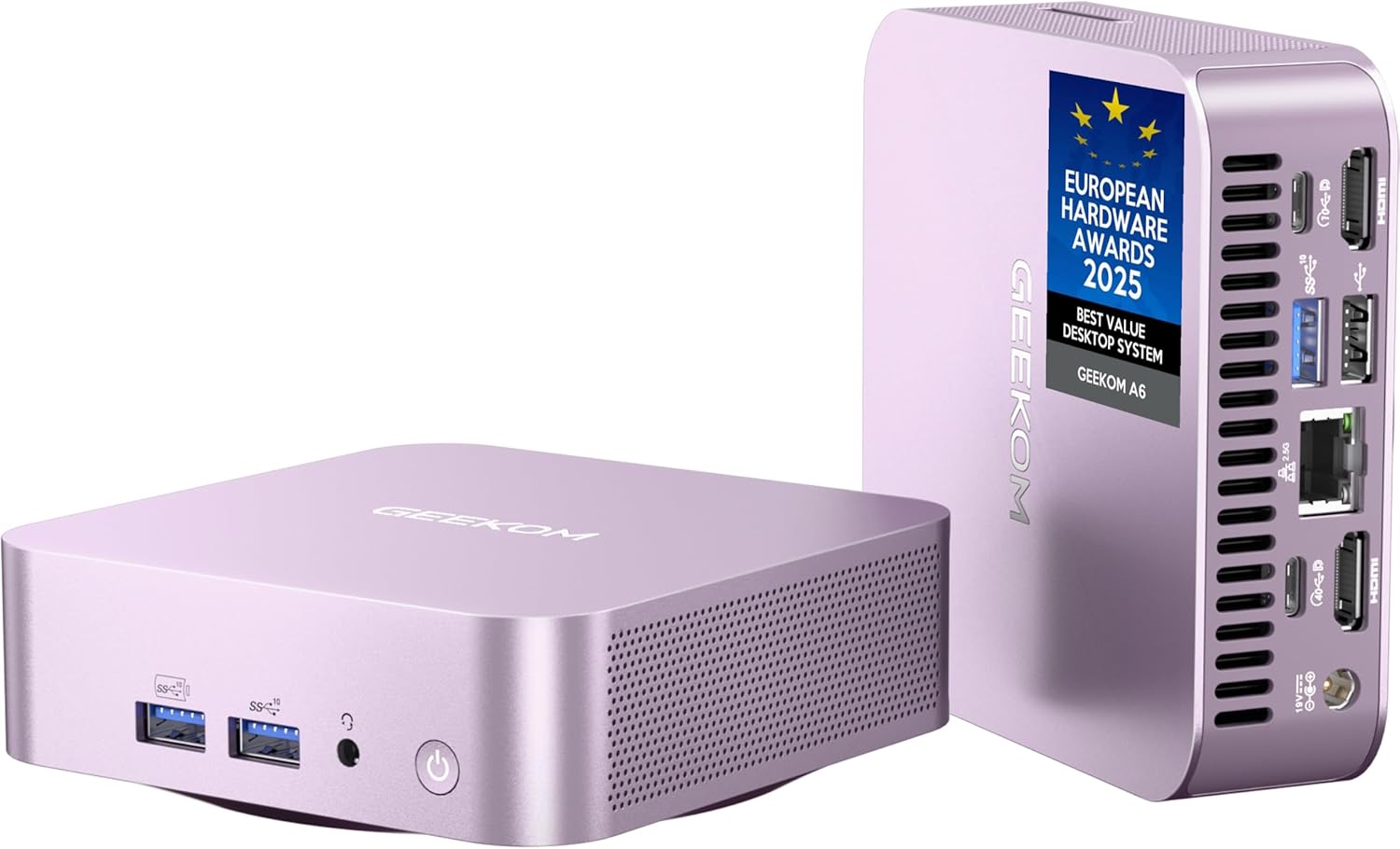
- You want better 1080p gaming performance (this is the big one)
- You do video editing or creative work that benefits from GPU acceleration
- You run Linux and want mature AMDGPU drivers out of the box
- You want the more future-proof iGPU for occasional gaming or GPU compute
Our pick: The GEEKOM A6 Aurora at $649. The Radeon 680M is a significantly better iGPU than Iris Xe, and the 6800H’s 8 cores are plenty for most users. Unless you specifically need Intel’s 14-core CPU, the A6 Aurora is the better all-rounder.
Amazon Product Links
- 🥇 GEEKOM A6 Aurora (Our Pick): → Check Current Price on Amazon
- 🥈 GEEKOM IT12 (Intel Alternative): → Check Current Price on Amazon
Related Articles
- GEEKOM IT12 Review — Full single-product review
- GEEKOM A6 Aurora Review — Full single-product review
- Best Ryzen 7 Mini PC — Our top picks for Ryzen 7 systems
- Best Mini PC Under $1000 — Budget-friendly options