
GEEKOM IT15 vs A9 Max: Intel vs AMD AI Mini PC Showdown [2026]
By Max · April 2, 2026 · Updated May 4, 2026
This article contains affiliate links. If you purchase through our links, we may earn a commission at no extra cost to you. We only recommend products we’ve thoroughly researched.
![GEEKOM IT15 vs A9 Max: Intel vs AMD AI Mini PC Showdown [2026]](/images/heroes/variants/geekom-it15-vs-geekom-a9-max/1920.webp)
The Short Answer
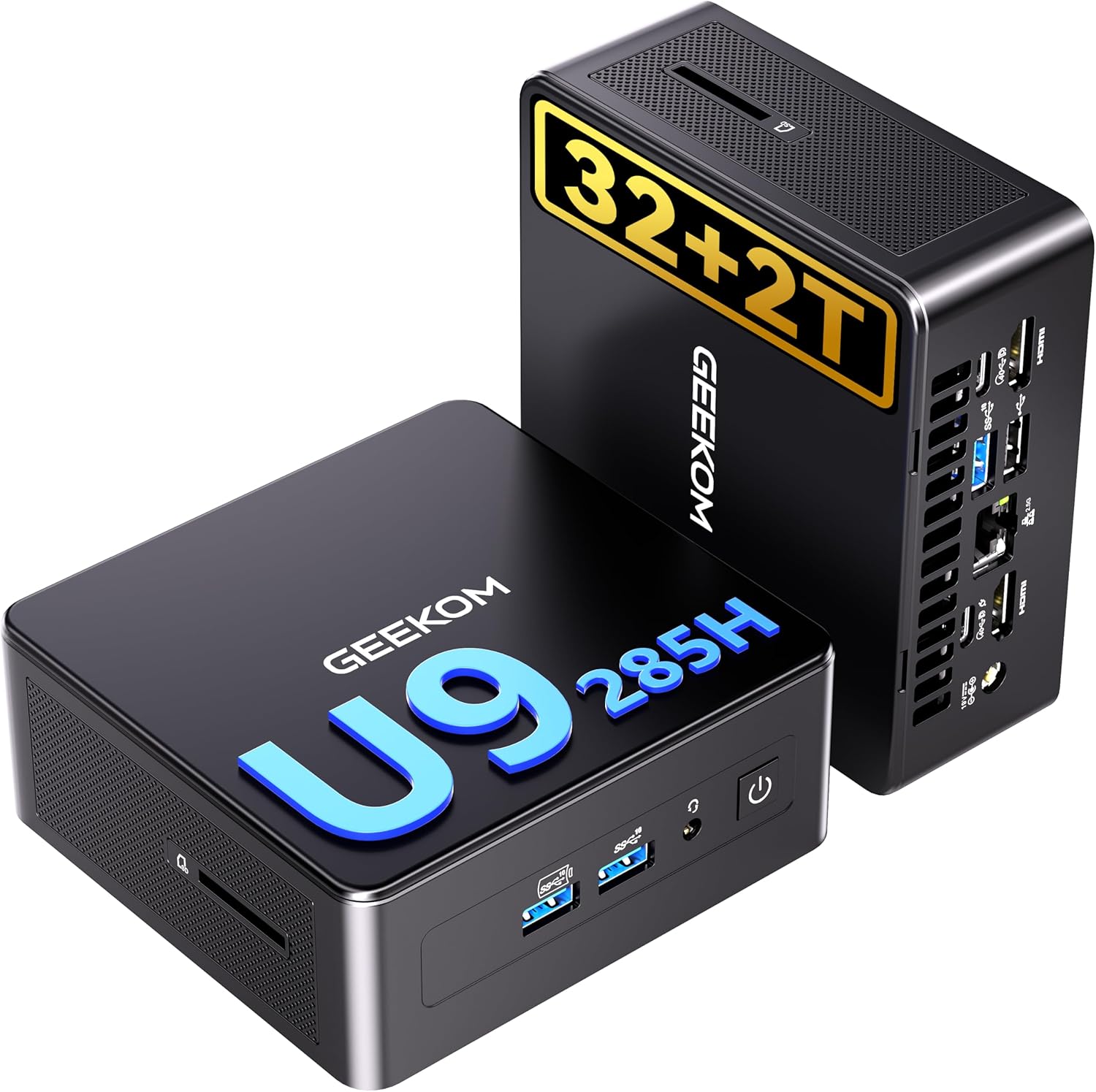
Two GEEKOM mini PCs, two different AI platforms. The GEEKOM IT15 at $1,499 uses Intel’s Core Ultra 9 285H with 99 TOPS of AI compute (13 from NPU + 77 from GPU + 9 from CPU). The GEEKOM A9 Max at $1,689 uses AMD’s Ryzen AI 9 HX 370 with 80 TOPS (50 from NPU + 30 from GPU). On paper, the IT15 wins on AI TOPS and price. But the A9 Max counters with upgradeable RAM to 128GB, dual 2.5GbE networking, and a 3-year warranty.
Pick IT15 if: You need maximum AI TOPS (99 vs 80), Intel ecosystem compatibility, or 2TB storage included.
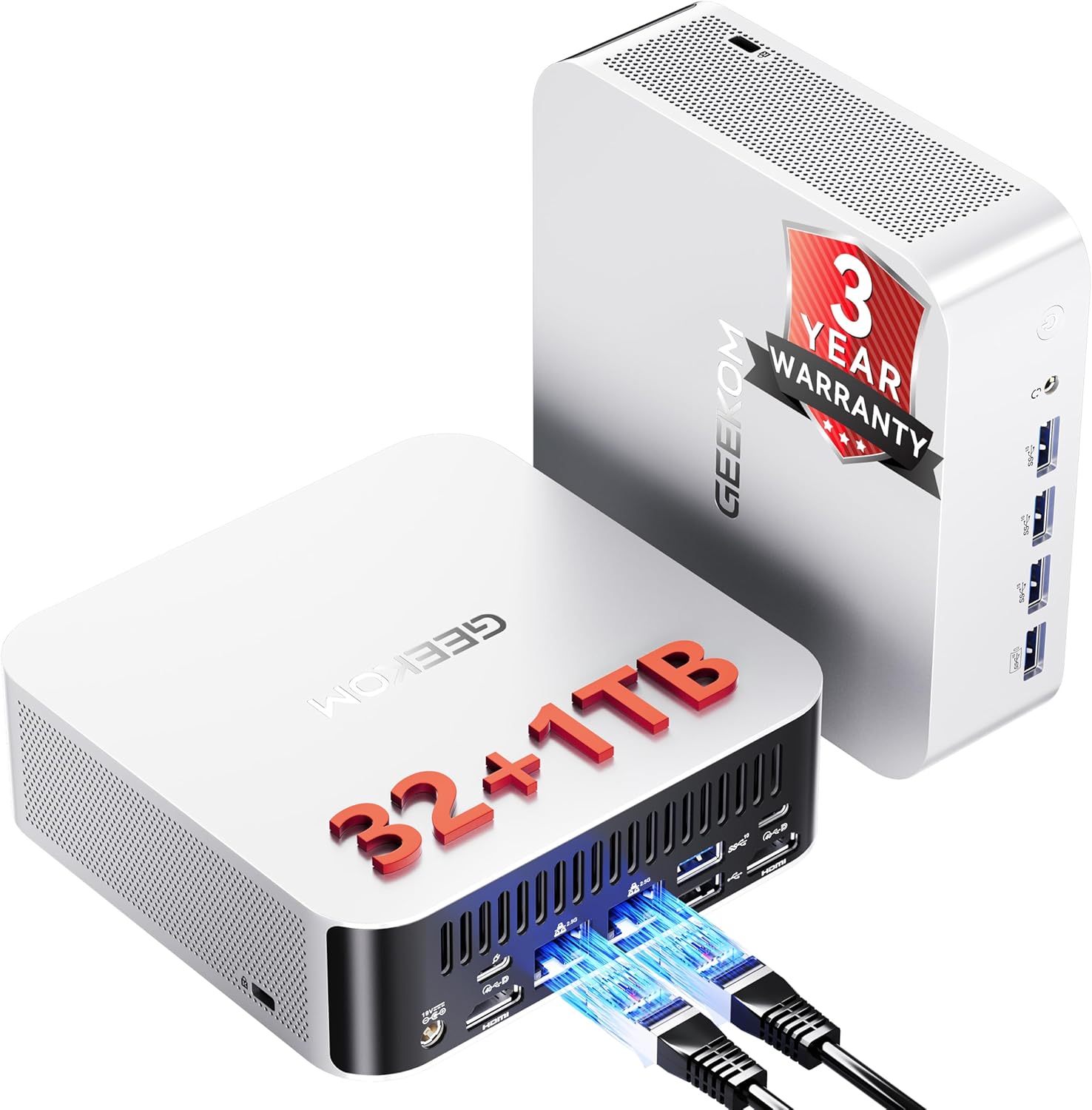
Pick A9 Max if: You need upgradeable RAM for 70B LLMs, dual 2.5GbE for homelab, or the 3-year warranty.
Side-by-Side Specs
| Spec | GEEKOM IT15 | GEEKOM A9 Max | Winner |
|---|---|---|---|
| CPU | Intel Core Ultra 9 285H | AMD Ryzen AI 9 HX 370 | Tie |
| GPU | Intel Arc 140T | AMD Radeon 890M (16 CUs) | A9 Max |
| NPU | Intel NPU (48 TOPS) | AMD XDNA 2 (50 TOPS) | Tie |
| Total AI TOPS | 99 TOPS | 80 TOPS | IT15 |
| RAM | 32GB DDR5 | 32GB DDR5 (up to 128GB) | A9 Max |
| Storage | 2TB PCIe 4.0 SSD | 1TB PCIe 4.0 SSD | IT15 |
| Networking | 2.5GbE + WiFi 7 | Dual 2.5GbE + WiFi 7 | A9 Max |
| USB4 | 2x USB4 (40Gbps) | 2x USB4 (40Gbps) | Tie |
| Reviews | 259 (4.5★) | 106 (4.4★) | IT15 |
| Warranty | 3 years | 3 years | Tie |
| Price | ~$1,499 | ~$1,689 | IT15 |
CPU and GPU Performance
GEEKOM IT15: Intel Core Ultra 9 285H (Arrow Lake-H). 16 cores (6P + 8E + 2LPE), 22 threads, up to 5.3 GHz boost. Intel Arc 140T GPU with Xe2 architecture. Built on Intel 4 process (7nm-class EUV).
GEEKOM A9 Max: AMD Ryzen AI 9 HX 370 (Strix Point). 12 cores / 24 threads (all Zen 4), up to 5.1 GHz boost. Radeon 890M GPU with 16 RDNA 3.5 compute units (1,024 shaders). Built on TSMC 4nm.
Single-threaded performance: The Intel 285H has a slight edge at 5.3 GHz boost vs 5.1 GHz on the HX370. For desktop tasks and lightly-threaded workloads, the IT15 feels snappier.
Multi-threaded performance: The AMD HX370’s 12 full Zen 4 cores outperform the Intel 285H’s 6P + 8E configuration in sustained multi-threaded workloads. For compiling code, running VMs, or batch encoding, the A9 Max has the edge.
GPU performance: The Radeon 890M (16 CUs, 1,024 shaders) outperforms the Arc 140T in most gaming and compute workloads. For Stable Diffusion, the 890M generates SDXL images in 8-12 seconds vs 12-18 seconds on the Arc 140T. For 1080p gaming, the 890M handles medium-high settings; the Arc 140T handles medium settings.
AI Compute: TOPS Showdown
GEEKOM IT15: 99 TOPS total (13 NPU + 77 GPU + 9 CPU)
- Intel NPU: 13 TOPS
- Arc 140T GPU: ~77 TOPS
- CPU: ~9 TOPS additional compute for AI workloads
GEEKOM A9 Max: 80 TOPS total
- AMD XDNA 2 NPU: 50 TOPS
- Radeon 890M GPU: ~30 TOPS
- CPU: Additional compute for AI workloads
On paper: The IT15 wins with 99 vs 80 TOPS — a 24% advantage.
In practice: The TOPS rating is marketing-heavy. Real-world LLM inference depends more on RAM capacity, memory bandwidth, and software support than raw TOPS.
For Ollama LLM inference:
- 7B models: ~30-50 tokens/sec on both (A9 Max slightly faster due to better ROCm support)
- 13B models: ~15-30 tokens/sec on both
- 34B models: ~10-20 tokens/sec on both (A9 Max can upgrade to 64GB; IT15 capped at 32GB)
For Copilot+ features: Both exceed Microsoft’s 40 TOPS minimum. Windows Copilot+ features work on both platforms, but Intel’s NPU has better software integration for Windows-specific AI features.
For Linux AI (ROCm vs Intel oneAPI): AMD’s ROCm has better llama.cpp support and more mature Linux drivers. Intel’s oneAPI is improving but lags behind for open-source AI tooling.
Memory and Storage
GEEKOM IT15: 32GB DDR5 (upgradeable — verify max capacity on product listing). 2TB PCIe 4.0 SSD included. The 2TB storage is generous at this price point.
GEEKOM A9 Max: 32GB DDR5 SO-DIMM, upgradeable to 128GB. 1TB PCIe 4.0 NVMe (dual M.2: 2280 + 2230). The upgrade path to 128GB is the key differentiator — this enables 70B LLM inference after a RAM upgrade.
Why RAM upgradeability matters:
- 7B model (Q4): ~4GB — both handle easily
- 13B model (Q4): ~8GB — both handle easily
- 34B model (Q4): ~20GB — both handle with 32GB
- 70B model (Q4): ~42GB — A9 Max can upgrade; IT15 may be capped
Storage: The IT15’s 2TB SSD is a genuine advantage for users who need immediate storage capacity. The A9 Max’s dual M.2 slots allow expansion, but you’ll need to buy a second SSD.
Networking and Connectivity
GEEKOM IT15: Single 2.5GbE (Intel controller). WiFi 7 and Bluetooth 5.4. Adequate for general use, but single NIC limits homelab flexibility.
GEEKOM A9 Max: Dual 2.5GbE (Intel controllers). WiFi 7 and Bluetooth 5.4. The dual NICs enable proper firewall/router builds (OPNsense, pfSense), link aggregation, or separate WAN/LAN networks. For Proxmox, dedicate one NIC to management and one to VM traffic.
USB4: Both have dual USB4 ports (40Gbps) with Power Delivery and DisplayPort support. Drive four 8K displays simultaneously.
Port selection:
- IT15: 2x USB4, 5x USB-A 3.2 Gen 2, 2x HDMI 2.1, 2.5GbE, SD 4.0, 3.5mm audio
- A9 Max: 2x USB4, 5x USB-A 3.2 Gen 2, 2x HDMI 2.1, dual 2.5GbE, SD 4.0, 3.5mm audio
Power Consumption
| Metric | IT15 | A9 Max |
|---|---|---|
| Idle (W) | ~10W | ~9W |
| Load (W) | ~65W | ~80W |
| Annual Cost (24/7 idle) | ~$10.51/year | ~$9.46/year |
Annual cost calculated at $0.12/kWh. Sources: NotebookCheck, community estimates.
The IT15 is slightly more power-efficient at idle (~10W vs ~9W) and significantly more efficient under load (~65W vs ~80W). The Arrow Lake-H platform on Intel 4 process is efficient for an Intel chip.
Design and Build Quality
Both systems use GEEKOM’s established design language — compact aluminium chassis with IceBlast cooling. Build quality is identical, and both include VESA mounts for behind-monitor installation.
GEEKOM IT15: Slightly larger chassis to accommodate the Intel platform and 2TB SSD. The port selection is excellent: dual USB4, five USB-A, dual HDMI 2.1, 2.5GbE, and SD 4.0 card reader.
GEEKOM A9 Max: Compact chassis with dual 2.5GbE ports. The IceBlast 2.0 cooling system uses a copper heatsink and dual heat pipes. Port selection mirrors the IT15 but adds the second NIC.
Warranty: Both include GEEKOM’s industry-leading 3-year limited warranty. This is a genuine differentiator vs competitors offering 1-year warranties.
Reviews and Community Proof
GEEKOM IT15: 259 Amazon reviews at 4.5 stars. Strong early reception, with users praising the 2TB storage and Intel AI performance. Some users report Arc GPU driver quirks on Linux — expected for a newer platform.
GEEKOM A9 Max: 106 Amazon reviews at 4.4 stars. Proven reliability over time, with users confirming HX370 performance and upgradeable RAM. Some users report S0 Low Power Idle sleep/wake issues — GEEKOM has released BIOS/EC updates that improve the situation.
Price and Value
At $1,499, the IT15 is $190 cheaper than the A9 Max at $1,689. Here’s what you get:
IT15 advantages:
- 99 TOPS vs 80 TOPS (on paper)
- 2TB SSD vs 1TB
- Slightly better power efficiency
- More reviews (259 vs 106)
A9 Max advantages:
- Upgradeable to 128GB RAM (vs 32GB cap on IT15)
- Dual 2.5GbE vs single
- Better GPU (890M vs Arc 140T)
- Better Linux AI support (ROCm)
Value ranking:
- For AI TOPS: IT15 wins
- For storage: IT15 wins
- For RAM upgradeability: A9 Max wins
- For networking: A9 Max wins
- For GPU: A9 Max wins
Real-World Use Cases
For Local LLMs (Ollama)
A9 Max wins. Both handle 7B-34B models well, but the A9 Max’s upgradeable RAM to 128GB enables 70B LLM inference. The IT15 may be capped at 32GB (verify on product listing). ROCm support on AMD is also more mature for llama.cpp.
For Homelab (Proxmox, OPNsense)
A9 Max wins. Dual 2.5GbE Intel NICs are essential for proper firewall/router builds. The IT15’s single NIC requires USB adapters for multi-NIC setups.
For Windows AI (Copilot+)
IT15 wins. Intel’s NPU has better Windows integration for Copilot+ features. The 99 TOPS rating exceeds Microsoft’s requirements, and Intel’s software stack is optimized for Windows AI workloads.
For Content Creation
Tie. The IT15’s 2TB SSD is valuable for video editors. The A9 Max’s 890M GPU handles 1080p editing better. Both support AV1 encoding. Choose based on your software ecosystem (Intel QuickSync vs AMD ROCm).
For Gaming
A9 Max wins. The Radeon 890M (16 CUs) outperforms the Arc 140T in most titles. 1080p medium-high settings on the A9 Max vs 1080p medium on the IT15.
Final Verdict: Which Should You Buy?
Buy the if
GEEKOM IT15
→ Check Current Price on Amazon
- You need maximum AI TOPS (99 vs 80) on paper
- You want Intel ecosystem compatibility (QuickSync, oneAPI)
- You need 2TB storage included out of the box
- You prioritize Windows Copilot+ features
- You want to save $190 vs the A9 Max
Buy the if
GEEKOM A9 Max
- You need upgradeable RAM to 128GB for 70B LLMs
- You need dual 2.5GbE for homelab/firewall use
- You want better GPU performance (890M vs Arc 140T)
- You prefer AMD’s mature ROCm Linux AI support
- You value the proven HX370 platform (106 reviews)
Amazon Product Links
- GEEKOM IT15 — $1,499 (Intel Ultra 9 285H, 99 TOPS, 2TB SSD)
- GEEKOM A9 Max — $1,689 (Ryzen AI 9 HX 370, 80 TOPS, dual 2.5GbE)
Frequently Asked Questions
Is 99 TOPS (IT15) noticeably better than 80 TOPS (A9 Max)?
In real-world LLM inference, no. The TOPS rating is marketing-heavy. Real performance depends on RAM capacity, memory bandwidth, and software support. For Ollama, both handle 7B-34B models at similar speeds. The A9 Max’s upgradeable RAM matters more for 70B models.
Can the IT15 run 70B LLMs?
With 32GB RAM, no — 70B Q4 models need ~42GB. Verify the IT15’s max RAM capacity on the product listing. If it’s capped at 32GB, the IT15 cannot run 70B models. The A9 Max supports up to 128GB DDR5, enabling 70B inference after a RAM upgrade.
Does Intel Arc or AMD Radeon have better Linux support?
AMD’s ROCm has better llama.cpp and open-source AI tooling support. Intel’s oneAPI is improving but lags behind for Linux AI workloads. For Windows, both platforms work well.
Is dual 2.5GbE useful for a mini PC?
Absolutely. Dual NICs enable proper firewall/router builds (OPNsense, pfSense), link aggregation for higher throughput, or separate WAN/LAN networks. For Proxmox, you can dedicate one NIC to management and one to VM traffic. Most mini PCs have a single NIC — this is a genuine differentiator.
Which has better gaming performance?
The A9 Max’s Radeon 890M (16 CUs, 1,024 shaders) outperforms the IT15’s Arc 140T in most titles. Expect 1080p medium-high settings on the A9 Max vs 1080p medium on the IT15. For serious gaming, neither replaces a discrete GPU.
Does the IT15 support Thunderbolt?
No. The IT15 uses USB4 (40Gbps), which is compatible with Thunderbolt 3/4 devices but doesn’t carry the Thunderbolt branding. For most users, USB4 provides equivalent functionality.